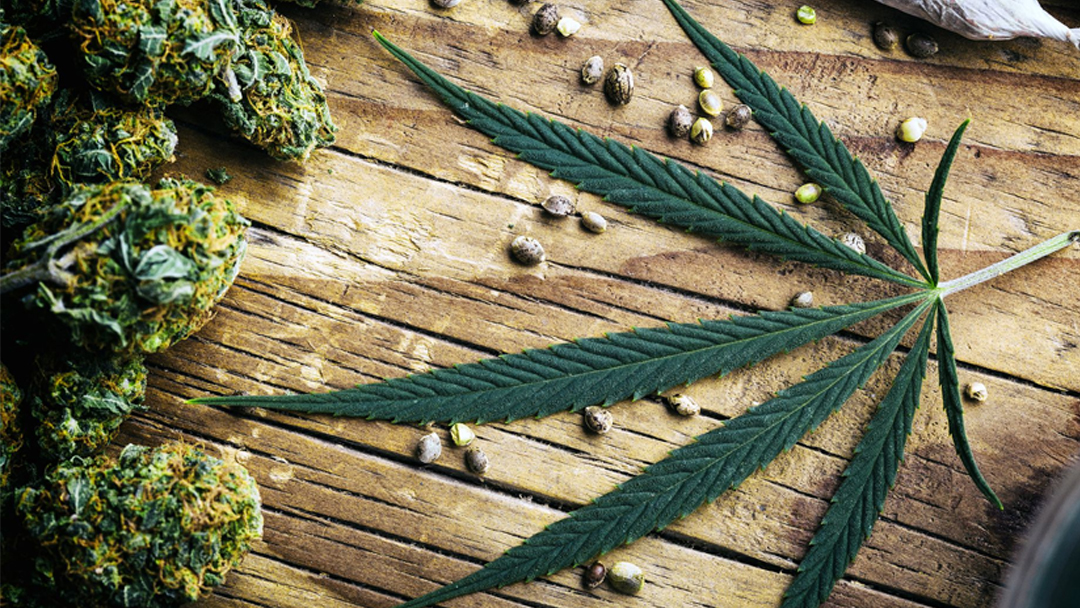
Cannabis, Marijuana, Weed, Reefer, Jive, Pot, Joint, Kaya whatever you like to call it, is a plant that grows naturally and provides mild intoxicant. Marijuana has changed drastically over the past decades due to cross-breeding. The weed we know today is laced with psychoactive resin buds, but that was not the 70s’ scene or the decades before that. How did this so-called notorious drug found a way into human civilization?

Origin of Cannabis
To understand where it all began, we have to jump 10,000 Bc back in time to Oki Islands in Japan. It was used to light fire, which ended up chilling everyone, pretty cool, isn’t it? Weed in Japan took a religious turn, whereas in China, it was useful. Chou dynasty records the use of weed in variety of ways, medicines, fabrics, ropes, even as a food, and most intriguing of all weapons. Bowstrings made by hemp were more powerful than the ordinary ones.
Furthermore, one of the first medicinal record of cannabis usage was written by Shen Nong Ben Cao Jing. He called it ma, 麻, unfortunately the father of Chinese medicine died doing experiments on himself. In India, weed took a form of drink Bhang similarly the Egyptians drank it as a tea; although smoking remains one of the preferred means worldwide.
In 1545 Bc Spanish started growing hemp in Chile, which travelled all the way north to Richmond, Virginia and to now known Washington DC. Laws in 1619 required farmers to grow the Indian Hemp mainly for rope, not the smoking kind (low THC) but they smoked it. Hence hemp became one the largest growing agricultural crop worldwide even in the US.
So, what is hemp? It is one of the soft fiber that is robust, durable and most importantly natural. Examples: Paper, textile, medicines, fuel, rope, etc. Now the question remains, with so much benefits, how did it become illegal in the first place?

Cannabis Law Timeline

Reefer Madness
1936 American Propaganda Movie depicting melodramatic events caused by the use of Marijuana. From Sanity to madness within puffs was the idea of the movie starring African American on the negative roles.
Death from Cannabis??
Over 10,000 years of usage, Marijuana alone has no recorded death.
We will compare two stories just to show how bad news travels like wildfire.
“Marijuana Kills Brain Cells”, 1974 by Dr. Robert Heath.
In 1974, President Ronald Regan announced that Marijuana can permanently damage brain cells referencing the above experiment. Basically, the idea was to pump monkeys with 30 joints a day and monitor them over the course of a year. However, within 90 days of experiments, monkeys begin to drop dead from atrophy. The result was brain cell damage.
Before you make any assumptions, here is the catch, after 6 years of request, the team finally shared the insights on the study. As it turns out instead of taking one year like the experiment should have, Dr. Robert and his team completed the whole thing in 3 months. How you say?
Well, gas mask, the team pumped the monkeys with 63 strong Colombian joints that too in 3-5 minutes for three excruciating months. These mask were pumped without losing smoke or any artificial oxygen connection. So the monkeys actually died of suffocation not cannabis or any property related to it.

“Stimulates Brain Cell Growth”, 2005 University Of Saskatchewan
Now in 2005 a group of scientists found Marijuana actually stimulates brain cell growth. Nobody seems to recall that anymore. According to the University of Saskatchewan:
“A synthetic substance similar to ones found in marijuana stimulates cell growth in regions of the brain associated with anxiety and depression, pointing the way for new treatments for these diseases.”
Other common beliefs back in the day: Weed causes lung cancer, mania, violent behaviors and more.
Marijuana: A question of Addiction?
Marijuana use combined with different factors or sometimes none can lead to abuse. National Institute on Drug Abuse, USA suggests out of total users, 30% might develop some kind of Marijuana use disorder. However calling it the most addictive is preposterous. If you list out the top five addictive substances, I doubt Marijuana will even make the list.
According to “American Addiction Centers” the 5 most addictive drugs are :
- Cocaine
- Heroine
- Alcohol
- Nicotine
- Methamphetamines/ Meth
To put it nicely Marijuana is habituating but you can quit it without the agony’s of withdrawal. Although one might experience common symptoms, such as:
- irritability
- mood and sleep difficulties
- decreased appetite
- cravings
- restlessness
These symptoms last about 2 weeks in general.
Marijuana: A Gateway Drug Theory
Marijuana has been often classified as Gateway Drug, that will eventually lead to use of harder substances. Like every other theories it has some truth in it ,but definitely not all of it. There have been no study that has proved the ultimate correlation of Marijuana with the use of other hard drug use without any contributing factors. In fact, Marijuana doesn’t have any inherent psychopharmacological agents (amphetamines ,pemoline, etc. ) that pushes one to other drugs. Only 1 out of 104 Marijuana users use cocaine and even less do heroines.
However there is a gateway not weed itself, but the prohibition that results in black market. Dealers who sell weed might budge someone to try something new. In that sense the lack of regulation and black markets is the gateway not the plant itself.
Laziness, Useless to Society
Another often recalled belief is Weed makes you lazy. According to 2019 data, there are roughly over 200 million people who smoke Marijuana and yet our societies seem to flourish. What about creative, non-stop working celebrities, people who you admire.
- Musicians: Louis Armstrong, Led Zep to Beatles, Snoop Dog(Lion), Willie Nelson.
- Steve Jobs- Apple Computer
- Ted Turner- CNN News Developer
- Jack Black- Actor, Comedian, Singer and many more.
All of the people have one thing in common, the love for Weed. The most surprising of all, almost every president in United States has at one point agreed to trying Marijuana. You might have watched Cheech and Chongs one of the classics. In the film Tommy Chong plays a role of stoner, similar to how the society presumes. What many people don’t realize or don’t even know that Tommy Chong wrote these movies. These people are creative, smart, what’s better they have become the very foundation of our society.
US: War On Drugs
Harry Jacob Anslinger, Does this name ring a bell? Anslinger served as commissioner of Federal Bureau of Narcotics and one of the early faces of War on drugs propagandas. His main focus were the demonizing the minorities like African American and Latinos. What better way to do so by pursuing harsh drug penalties especially on Cannabis? Anslinger targeted Jazz musicians like Louis Armstrong, Billie Holiday, with agents arresting and hand-cuffing them. Anslinger had successfully created “The Other” (reference to social identity theory); the ones that are violent, menace to society, wrong, and could potentially harm you running around crazy on Marijuana.
In 1971, President Nixon took on the stage to declare “War on Drugs” through a press release calling out “Drug abuse, Number one Public Enemy.” Just like that, Weed became classified as a Schedule I drug, the most dangerous drug with high risk of dependance, abuse and no medical properties. With an initial budget of $155 million, the Special action on Drug abuse began “War on Drugs” and so did the suffering. President Regan continued this policy adding more to the issue. Weed was a significant part of Political Campaign, a so-called “Dangerous Drug”.
In 1972, United States Drug Enforcement Administration (DEA) staffing and budget was only $65M now decades later the small organization has turned into a massive agency with $3.136 billion spending. The spending is believed to reach $41 billion by 2022. In total from 1971 US has spend $1 trillion on “War in Drugs.” How many did they arrest?
Mass Incarceration: The New Jim Crow (Age of Colorblindness)
Over 2.1 million people have been arrested on drug offense and by 2019 alone, the DEA incarcerated 1.5 million on drug related charges. Furthermore, mass incarceration costs US $182 billion annually.

Out of arrests made 80% on Federal and 60% on State level are either black or Latino and belong from a poor household. Not like the drug Kin Pin that we are used to picturing. Meanwhile in 2019, more than 55% of White people reported on using drugs at some of time in life. Similarly in case of Africans American and Latino the usage of drugs was below 50%.
Many have called this approach as extreme as Draconian Laws due its harsh regime; because once you are incarcerated you almost evidently become a criminal in the eyes of society. Moreover, these people will never be able to get a good job, college enrollment, loans for housing and many more.
Economic Cost
War on Drugs is a burden through economic perspective, given the series of consequences sparked by making something illegal.
- Supply Reduction : Combating Drug offenses through means of Criminal Justice.
- Demand Reduction : Education, prevention and treatment for Drug users.

Every year the US allocates more budget on Supply Reduction than Demand Reduction ,which seems to causing more harm than victory in war that US might not win. Thankfully this grave difference in budget allocation is slowly changing. From Obama administration to now Biden have allocated more in demand reduction than law enforcements. ( A little over 5.6 billion more on reducing demand reduction.)
Is that enough?
Why does Schedule matter?
Even though there were highly addictive hard-drugs present, weed was and still is one of the most popular illicit drugs. So when Nixon reformed the Drug laws, Marijuana was also added on Schedule I drug.
There in total of five drug schedules:
Schedule I
Drugs that have no accepted medical use and high potential for abuse. Some of them are: heroin, LSD, marijuana, ecstasy, methaqualone, and peyote.
Schedule II
Drugs with high potential for abuse and leads to psychological or physical dependence. Some of them are: cocaine, meth, oxycodone, Adderall, Ritalin, and Vicodin.
Schedule I and II have heavy regulatory restrictions.
Schedule III
Drug with lower potential for dependency. Some of them are: Tylenol with codeine, ketamine and anabolic steroids.
Schedule IV
Compared to other Schedules this category has low potential for abuse and dependency. Some of them are: Xanax, Soma, Darvocet, Valium, and Ambien.
Schedule V
Likewise, in contrast to Schedule IV, these drugs have even lower potential for abuse. Some of them are: Robitussin AC, Lomotil, Motofen, Lyrica, and Parepectolin.
Prohibition Theory and Why it doesn’t work?
One of the best example to answer this question : Alcohol Prohibition. What started as a noble experiment to reduce crime and corruption, improve health and hygiene miserably failed on all counts. Under the prohibition things got worse, alcohol poisoning escalated to 600% while organized crime gangs like, Al Capone, Machine Gun Kelly and Lucky Luciano came to surface. Now they were the ones handling the black market and government had lost control over it. As most people didn’t support this law, crimes, violence increased, people had disregard to law and police activities. Thus, many countries around the world lifted the ban.

Health Benefits of Cannabis
What is Cannabis ?
Before we get to the health benefits, lets get some insights on the plant itself, Cannabis, is a plant belonging to family Cannabaceae. Although the exact number of species is still disputed, you may know these three quite well:
- Cannabis Sativa: The name was given by Carl Linnaeus in 1753, a Swedish Botanist. These plants were tall and had thin leaves.
- Cannabis Indica: Darker and thicker leaves, from Hindu Kush Mountains.
- Cannabis Ruderalis: Small plants from Russia.

Now something interesting about Cannabis that Linnaeus noticed early on. Usually plants have both male and female parts, in case of Cannabis, some plants are male, producing only seeds and others produced pollen, female plants. Once, he figured this out, Linnaeus did a little experiment that gave rise to the buds laced heavily with psychoactive resins.
Carl Linnaeus Windowsill Experiment
As a part of an experiment, the scientist decided to put one of the female plants on the windowsill, what happened next got him very excited.

Before I explain what happened, here is an essential information. Flowers contain the most resin, which is most of oil that gets you high. While the stem and leaves have some psychoactive. Female Cannabis plants in general grow huge flowers, meaning more resin and good high. So when Linnaeus separated the female plant on the windowsill, the plant produced high levels of pollen in hope of attracting seeds but alas. Hence when the plant don’t pollinate the production of THC doesn’t stop meaning more flowers and psychoactive agents. Somewhat similar procedure are used nowadays to create more potent buds without seeds giving better high, also known as Sinse or Sinsemillas , Spanish for seedless.
But how does a plant make us high?
Cannabis contains of psychoactive chemical knows as THC or Tetrahydrocannabinol that is responsible for getting us high. The second most active chemical in Cannabis is CBD or Cannabidiol, that helps with anxiety but doesn’t get us high. Apart from THC and CBD, Cannabis has more than 100 compounds also known as Cannabinoids. Researchers found that we produces some these chemicals naturally; endocannabinoid system that produce these chemicals are present in all animals except insects.
Cannabinoid are associated with: Food regulation, cognition, fine motor movement, reducing stress, making us forget, and even the euphoria after a sweaty workout. But that’s not all Marijuana contains over 400+ compounds. Through extensive crossbreeding, cultivators have been able to produce all sorts of hybrid, a familiar example, Pineapple Express. This changed the overall outlook of Marijuana making it burst with flavor and psychoactive resin.
Health Benefits:
- Reduces anxiety
- Helps lower blood pressure
- Reduce inflammation
- Prevents Seizure, helps to treat epilepsy
- Relief chronic pain
- Fighting Cancer: Helps alleviated chemotherapy effects.
Regulation, the ultimate solution.
Global Market Development
During the pandemic, cannabis went through record-breaking sales. In 2021 alone, CBD and medical-cannabis sales topped $37.4 billion and this could rise to $102 billion by 2026( The Global Cannabis Report: Second Edition ). The two big contenders in the markets, US and Canada. This is the legal sales record, illegal sales could be going twice or three times as higher. Regulating the Marijuana market, means the illegal sales also turn into revenue. At the same time, government has a firm grasp on the market.
Standardizing Marijuana
Lets take US into consideration, 18 states at the moment have legalized recreational use of Cannabis. Hence, everyday new products hit the market with various names and THC to CBD ratio. Some up to 100%, increasing the risk of paranoia, anxiety in many users. THC and CBD are connected, the more THC in a weed means less ratio of CBD. By regulating the Marijuana, government can create a standard unit of Cannabis with consist compounds.
For example, Wine can’t be sold as beer or vice-versa. Because the government has standardized the type, alcohol contains and more. So, you know what it means to buy a bottle of wine or beer; however we have no idea what it means to buy the equivalent in Cannabis. In order to regulate, global markets needs to legalize weed in the first place.
Billion-Dollar Crop
Before Cannabis was banned, hemp the billion dollar crop was large contributor in textiles, medicines, ropes, fuel, construction materials, and more. Who is to say, we can’t switch back again?
Wrapping UP
To sum up, Cannabis has been an integral part of human beings, yet we have so much more to learn about the plant. The prohibition has evidently done more harm than good. This has led to uncertainty around Marijuana, is it mysterious, sacred or demonic? What do you think? Please share your opinions in the comment sections below.


Howdy! I could have sworn I’ve been to this blog before but after browsing through some of the post I realized it’s new to me. Anyways, I’m definitely delighted I found it and I’ll be book-marking and checking back often!
so much good info on here, : D.
some times its a pain in the ass to read what website owners wrote but this site is rattling user genial! .
Hi, thanks for giving us a read and dropping this valuable comment. We’ll surely contact you if we need a writer for us. Cheers!